 Loading... Please wait...
- Call us on 2489939886
- My Account
- 0.00
- Home
- Rough Rock
- Lake Superior Agate`


Lake Superior Agate`

Product Description
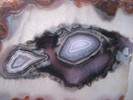
More than a billion years ago, the North American continent began to split apart into two separate continents. This catastrophic event, spurred by molten rock moving deep within the earth, poured out massive, iron-rich lava flows. These flows now are exposed along the north and south shores of Lake Superior. The tectonic forces that attempted to pull the continent apart, and which left behind the lava flows, also created the Superior trough. The trough eventually became the basin of Lake Superior and the lava flows became the birthplace of Lake Superior agates. Water vapor and carbon dioxide became trapped within the solidified flows in the form of millions of bubbles, called gas pockets or vesicles. Later, groundwater carrying ferric iron, quartz, and other dissolved minerals passed through the trapped gas vesicles. These quartz-rich groundwater solutions crystallized into concentric bands of fine-grained quartz called chalcedony. Over the next billion years, some of these quartz-filled, banded vesicles -- agates -- were freed by running water and chemical disintegration of the lavas, since these vesicles were now harder than the lava rocks that contained them. The vast majority, however, remained lodged in the lava flows until the next major geologic event that changed them and Minnesota. About 2 million years ago, the world's climate grew colder signaling the beginning of the Great Ice Age. A lobe of glacial ice, the Superior lobe, moved into Minnesota 10,000 to 15,000 years ago. It followed the agate-filled Superior trough. The glacier picked up surface agates and carried them south. Its crushing action and cycle of freezing and thawing at its base also freed many agates from within the lava flows and transported them also. The advancing glacier acted like an enormous rock tumbler, abrading, fracturing, and rough-polishing the agates.-WET pic.-(8.2 oz.)
Warranty Information
null